
-
Talk to Our Experts +971 58 987 0704
-
Email Us info@bennellin.com
-
Opening Hour Mon - Sat 8:00 AM - 6:30 PM, Sunday - CLOSED

Audio Visual Solutions in Dubai:
AV Design and Installation
What are audio visual solutions?
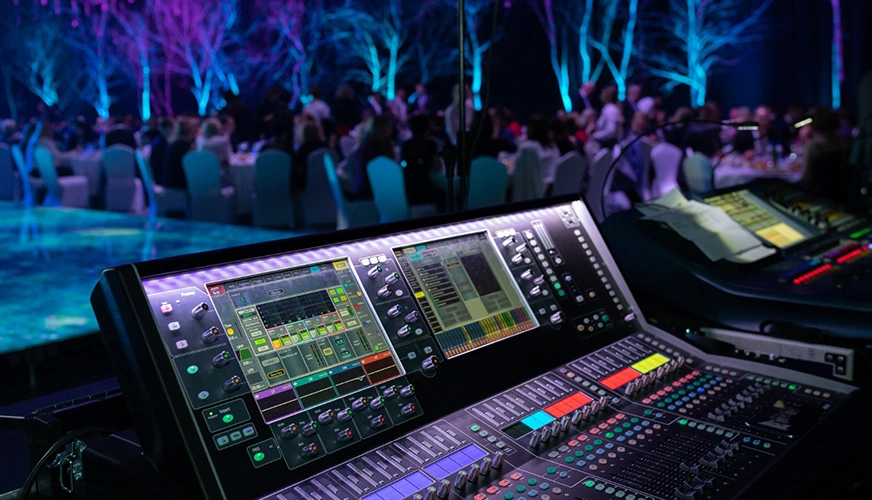
Audio visual solutions are integrated systems that capture, display and distribute sound and images. They include displays, video walls, projectors, speakers, microphones, conferencing tools and control systems. It’s more than a screen on a wall. It’s every piece of equipment that lets people in a room, or across several rooms, see and hear the same thing clearly. Dubai offices, hotels, schools and venues use them for meetings, presentations, training and events. Bennellin designs, installs and supports AV systems matched to the room and the job.
A good meeting room disappears. Nobody thinks about the screen, the microphones or the cables. They just see, hear and get on with it. That takes planning. Audio visual solutions in Dubai have to cope with glass-heavy buildings, big open spaces and a mix of languages, devices and expectations.
Bennellin is a Dubai-based audio visual company and technology integrator. We treat AV as part of the building’s wider systems, not an add-on.
What Is an AV System Made Of?
A working system usually has three parts.
 Visual: Displays, video walls, projectors and digital signage. They show presentations, video calls, dashboards and messages.
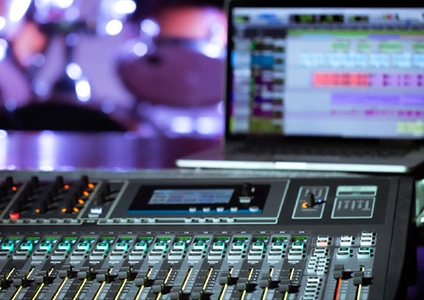
- Audio: Microphones, speakers, amplifiers and sound processing. They make sure everyone in the room is heard, including the person at the far end of a call.
- Control and connectivity: Touch panels, switchers, wireless sharing and the network behind them. They let anyone start a meeting without calling IT.
Get one part wrong and the whole room suffers. A sharp 4K screen is wasted if nobody can hear the speaker.
Audio Visual Solutions in Dubai for Every Kind of Space
Each space asks a different question of its AV system. These are the common ones:
- Meeting rooms and boardrooms: Clear video calls, easy screen sharing and microphones that pick up everyone at the table.
- Training and classrooms: Large displays or projectors, clear speech and simple controls for the instructor.
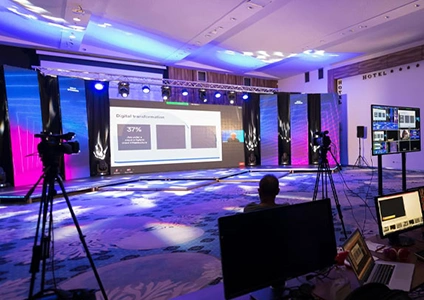
- Auditoriums and event spaces: Speakers placed to cover a large room evenly, plus projection or LED screens that all seats can see.
- Hotels, retail and showrooms: Digital signage and background audio that support the brand and can be changed remotely.
- Control rooms and lobbies: Video walls that show live data, camera feeds or visitor information.
Planning a dedicated conferencing setup? See our video conference solutions. Want AV in your home? See our home automation solutions.
Video Wall and LED Screen Solutions
A video wall turns several screens, or one LED surface, into a single large image. You see them in control rooms, lobbies, showrooms and hotel atriums.
There are two main routes. LCD video walls use thin-bezel panels tiled together. They work well indoors, where people stand fairly close. Direct-view LED walls have no seams between panels. They get very bright and can be built to almost any size or shape.
A few things decide which suits you:
- How far viewers stand: Close viewing needs a finer pixel pitch. Distant viewing doesn’t.
- Ambient light: A lobby with big windows needs a brighter screen than a dim control room.
- What it will show: Live data, video, signage and camera feeds each ask for different controllers and content tools.
- The space around it: Mounting structure, power and cooling need planning before the screen arrives.
AV Integration in Dubai: Technology That Works Together
AV integration means designing screens, sound, control and network as one system, not as separate boxes. The room starts with one touch. The same setup can be managed and supported as a whole.
The technology we work with includes:
- AV over IP: Sends video and audio across your network. Rooms can share sources, and the system can grow without rewiring.
- DSP (digital signal processing): Tunes the sound in the room. It cuts echo, balances microphones and keeps speech clear.
- Touch panels and control systems: One simple screen runs the display, audio and lighting presets.
- Wireless presentation: Guests share their screen without hunting for cables.
What to Plan Before Installing AV in Dubai
Most AV problems start before the equipment arrives. These are the things we’d settle first:
- Room size and shape: They decide screen size, speaker placement and how far microphones need to reach.
- Acoustics: Glass walls, hard floors and high ceilings cause echo. A good design allows for them.
- Lighting: Bright windows wash out screens and projectors. Display type and placement should respond to this.
- Cabling and network: Video, audio and control signals need proper cabling and a stable network.
- Who will use it: A system that only the IT team can run will sit unused. Simple controls get used.
Our AV Installation Process: 6 Steps
Consultation
We start with how people use the room. What’s it for? Who uses it? And what’s been annoying about the current setup?
Design
We survey the site, then draw up the layout, equipment list and cabling plan. You get a written scope before any work starts.
Equipment
We choose equipment to fit the room and your budget, then order and check it before it reaches the site.
Installation and Calibration
We mount, cable and connect everything. Then we tune the sound, set up the displays and test every input.
Training
We show your staff how to run the system. A room only works if people feel comfortable using it.
Support
We stay on after handover. Regular checks catch faults before a meeting starts.
Why Choose Bennellin as Your Audio Visual Company in Dubai?
AV doesn’t work alone. It depends on your network, your cabling and often your security systems. When you compare AV companies in Dubai, ask who handles those too. Bennellin already works across IT infrastructure, CCTV, access control and visitor management. That helps when a project needs several systems to work together.
You deal with one Dubai-based team instead of coordinating separate vendors for screens, cabling and network. For AV integrators in Dubai, that’s the difference between a room that works on handover day and one that’s still being fixed a month later.
Discover More Technology Solutions
- IT Infrastructure: The network and cabling that carry video calls and streamed content.
- SIRA-Approved CCTV: Surveillance that covers the same buildings and rooms your AV serves.
- Access Control Systems: Control who can enter your meeting rooms and server areas.
- Visitor Management Systems: Check guests in before they reach your boardroom.
Plan Your AV Project in Dubai
Whether it’s one meeting room or a whole building, the best AV project starts with a conversation about how people use the space. Tell us what the room is for and who uses it. We’ll recommend a system to match.
Frequently Asked Questions
-
01. What is an audio visual solution used for?It’s used wherever people need to see and hear information together. Common uses include boardroom meetings, video conferencing with remote colleagues, classroom teaching, product presentations, digital signage in lobbies and showrooms, and live events. The aim is simple: everyone in the room, and anyone joining remotely, can follow clearly.
-
02. What is AV integration?AV integration is the work of making screens, speakers, microphones, control panels and the network behave as one system. An integrator designs it, installs it, tests it and supports it. The result is a room anyone can start with one touch, instead of a pile of equipment that needs an expert.
-
03. What do AV systems in Dubai include?Most projects include displays or projectors, video walls, speakers, microphones, video conferencing equipment, digital signage and control panels, plus the cabling and network behind them. Exact scope depends on the space. A small meeting room needs far less than an auditorium, so a site visit usually comes before any quote.
-
04. How do I choose the right AV system for my room?Start with how the room is used. Then consider its size, acoustics and lighting, because those decide what equipment will work. A boardroom needs good microphones and easy video calling. A training room needs a large, bright display. Choose controls your staff can operate without help, and plan the network early.
-
05. Do you set up Microsoft Teams and Zoom rooms?Yes. We design meeting rooms that work with the platforms your team already uses, so a call starts with one touch. The room needs the right camera, microphones, speakers and network to run well. We check those during the site survey.
-
06. How much does AV installation cost in Dubai?There’s no standard price. Cost depends on room size, how many screens and speakers you need, the type of conferencing equipment, the amount of cabling and how much control and automation you want. Installation complexity also affects the total. A site visit and a written scope give you an accurate quote.
-
07. How much does a video wall cost?It depends on the build. Screen size and technology (LCD or LED), pixel pitch, brightness, the controller and content software, the mounting structure, power and cooling, and how hard the install is all move the price. A written quote after a site visit is the only way to get a real figure.
-
08. Can audio visual systems connect to my existing network and security systems?In most cases, yes. AV equipment runs on your network, so it needs proper cabling and a stable connection. It can also work with access control and other building systems. Compatibility depends on your current equipment, which is why a site survey comes before design.
-
09. Do I need ongoing support for an AV system?Yes, it’s worth having. AV equipment depends on software, firmware and cabling that can fail or drift out of date. Regular checks catch faults before a meeting starts. Ask whoever installs your system about maintenance and support options, and get what’s covered in writing.


Need Expert
Assistance?
Get in touch with our specialists for reliable, SIRA-approved security and IT solutions tailored to your business needs.