

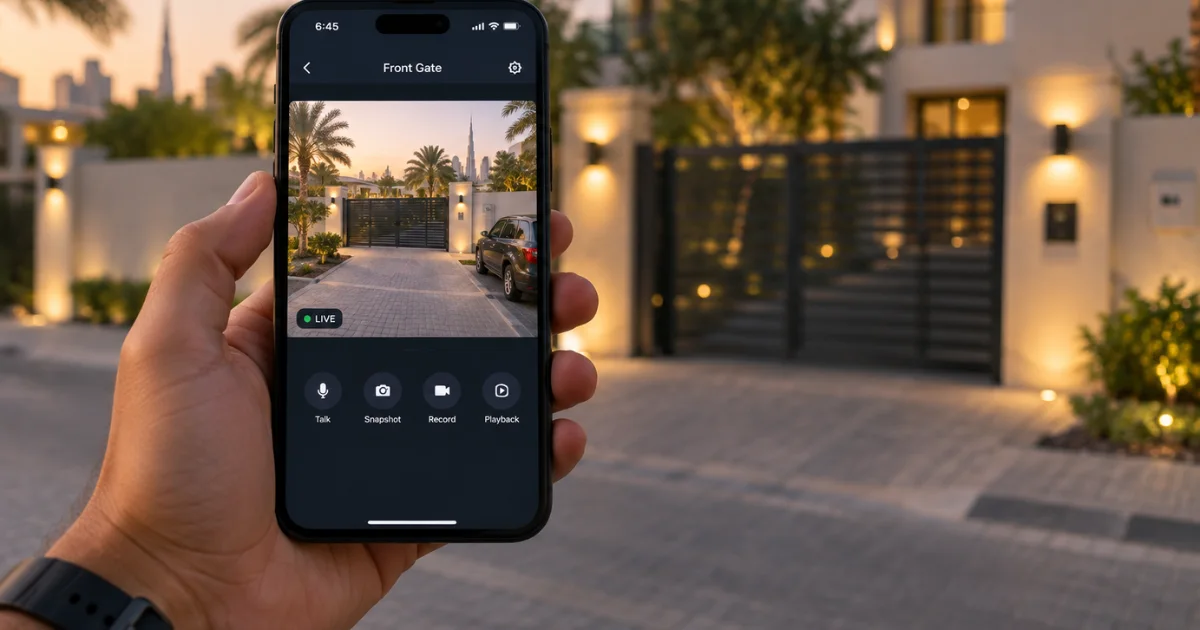
What Does Remote CCTV Monitoring Actually Mean for a Villa in Dubai?
Remote CCTV monitoring is simply the ability to view live or recorded footage from a security camera system on a phone or tablet, wherever that phone happens to be. In Dubai, the setup carries an extra layer many homeowners overlook. Businesses need an SIRA-approved CCTV installation to meet trade license and resolution requirements, and while a private villa isn't bound by the same commercial rules, plenty of residents still choose certified installers because the hardware and network setup tend to hold up better over time. A camera that streams choppy, low-resolution footage to your phone at two in the morning isn't much use, regardless of what the box promised.
Setting Up Mobile Access Without the Guesswork
Getting a camera onto your phone comes down to three things: the camera itself, the app it pairs with, and the network carrying the footage. Wireless options built around brands like Tiandy are popular for homes and small shops because they need minimal cabling and connect through a straightforward mobile app. Larger properties running several IP cameras at 4K resolution are a different story. That kind of bandwidth needs a properly planned network, and this is usually handled through structured cabling and network solutions before a single camera goes on the wall. Skipping that step is the most common reason people end up staring at a buffering icon instead of their own front gate.
Choosing Camera Types With Remote Viewing in Mind
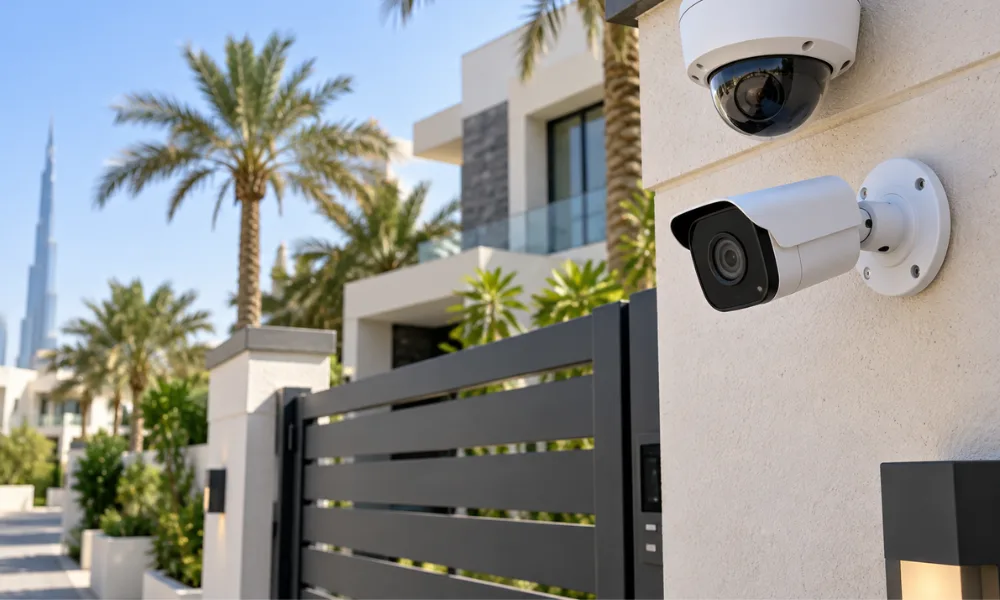
Not every camera design suits an empty house the same way. Dome cameras sit low profile on a ceiling and work well indoors, in a hallway or a majlis, since they're harder to tamper with and less obvious to guests. Bullet cameras are built to be seen, which makes them a solid deterrent on an exterior wall or a driveway gate. For a larger villa compound, PTZ cameras that pan, tilt, and zoom give a much wider field of remote control straight from the app, letting someone check a specific corner of the garden without needing four separate cameras there. Turret cameras handle night footage without the glare that dome cameras sometimes pick up outdoors, which matters if most of your remote checking happens after dark.
Keeping the System Working While You're Not There
A camera system left unchecked for months tends to fail quietly. Firmware goes out of date, storage fills up, and nobody notices until the one clip that actually matters is missing. An annual maintenance contract, usually shortened to AMC, covers scheduled inspections so the hardware stays functional between the times you actually think about it. For personal use, the same logic applies even without any regulation attached. A quick check of the app before a long trip beats discovering three weeks later that the recording stopped.
Where the Legal Line Sits for Home Systems
UAE law is fairly specific about CCTV for commercial premises, requiring SIRA-approved installation as part of trade license renewals for offices, retail spaces, and warehouses. Private villas don't carry that same obligation, but the picture changes the moment a camera captures a public street, a neighbor's entrance, or a shared building area, since privacy considerations apply regardless of whether the property is commercial. If there's any doubt about where a camera's field of view actually lands, checking with a certified installer before mounting it is a more reliable approach than guessing.
Final Thoughts
Remote monitoring only works as well as the setup behind it. Camera choice, network planning, and a maintenance schedule matter more than whatever number is printed on the box. If you're already running a system, it's worth checking whether it truly supports secure remote streaming before your next trip, rather than assuming it does. And if you're starting from nothing, what does your current home network actually support?
FAQ
Yes, as long as the camera system connects to an internet-enabled recorder or IP camera and pairs with its manufacturer's app. Coverage depends on your home network staying online and the camera brand supporting remote streaming, so checking that before you travel saves a lot of frustration later.
Not legally, since SIRA rules mainly target commercial properties in Dubai. Plenty of homeowners still choose certified installers anyway, since the network setup tends to be more stable and the cameras usually come with better long-term support than a basic retail kit.
It depends on camera resolution and how many are running at once. A single HD camera streams fine on a modest home connection, but several 4K cameras uploading at the same time need a properly planned network, not just a stronger router.
Checking occasionally makes almost no difference. Leaving a live feed open continuously, or setting push notifications for every motion event, is what actually drains a phone faster, especially when monitoring several cameras from one device.
Most systems keep recording locally to an SD card or NVR even without an internet connection, so footage isn't lost. You simply lose live viewing and alerts until the connection returns, which is why a stable network matters more than the camera brand itself.