

Why Is My Industrial Shutter Door Stuck?
The most common reason for a stuck door is a buildup of dirt or debris in the tracks. In the dusty environment of the UAE, sand and grime act like sandpaper, grinding against the rollers and eventually causing a complete jam. If the door moves sluggishly or stops halfway, check the guide rails first.
Beyond physical obstructions, industrial roller shutter door issues often come down to misalignment. If the tracks aren't perfectly parallel—perhaps due to a minor forklift bump or building settlement—the door will bind. You'll notice the motor straining or hear a rhythmic "clunk" as the slats try to navigate the bend.
What Causes a Motorized Shutter to Fail?
If the power is on but nothing is moving, you're likely dealing with motor fatigue or sensor malfunctions. Motors can overheat if used more frequently than their duty cycle allows, especially in high-temperature warehouses. Most modern motors have a thermal cutout; sometimes, the "fix" is simply letting it cool down for 20 minutes.
However, if the door starts to close and then immediately reverses, your safety sensors are the prime suspect. These "eyes" at the base of the door prevent accidents by detecting obstacles. If they're misaligned or covered in dust, they'll trigger a false positive, leaving your facility wide open and insecure.
5 Common Problems and How to Prevent Them
- Track Obstructions: Sand and debris are the enemies of smooth motion.
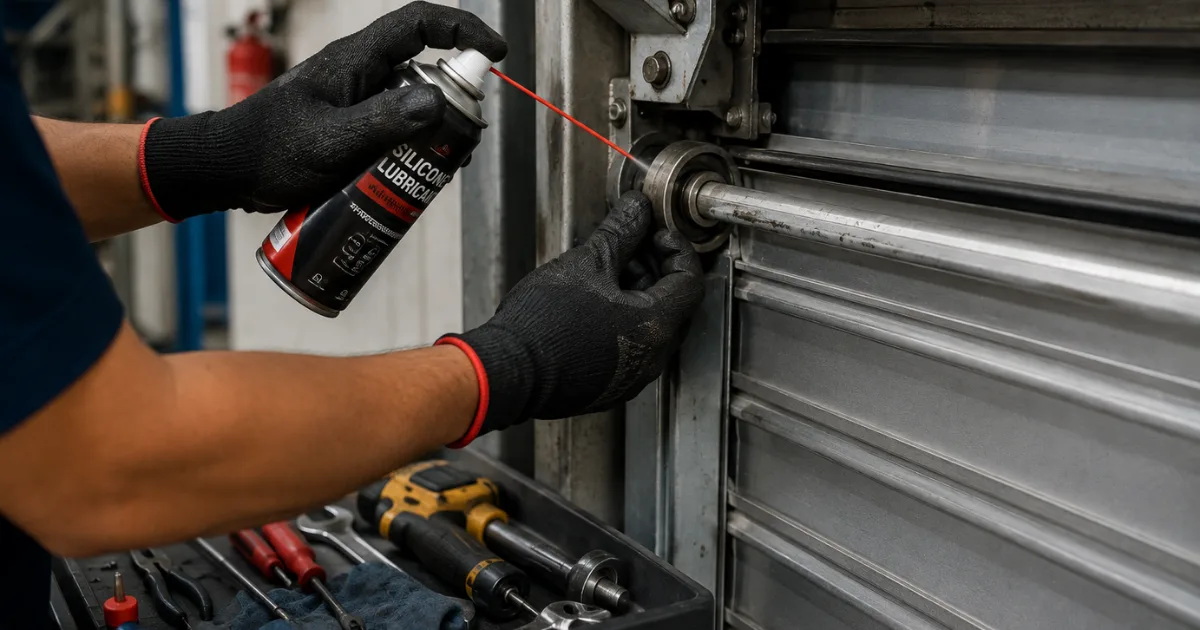
Prevention: Schedule a monthly sweep of the tracks and use a stiff brush to clear out buildup. - Lack of Lubrication: Dry hinges and rollers lead to friction and metal fatigue.
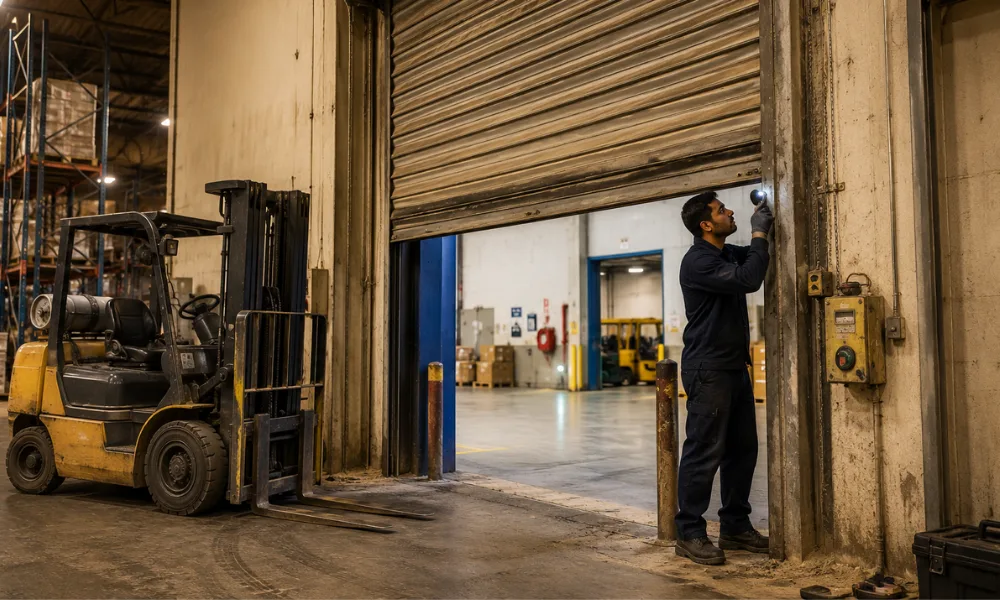
Prevention: Apply a high-quality silicone-based lubricant every six months. Avoid heavy grease that traps dust. - Sensor Misalignment: Vibrations from heavy machinery can knock safety sensors out of place.
Prevention: Weekly visual checks to ensure the sensor lights are green and properly aimed. - Dented Slats: Minor impacts from pallets or vehicles compromise the door's balance.
Prevention: Install safety bollards or floor markings to keep traffic a safe distance from the door. - Spring Tension Loss: Torsion springs do the heavy lifting. Over time, they lose their "bounce" or snap entirely.
Prevention: Listen for squeaking or jerky movement; these are early warning signs that the tension needs a professional adjustment.
Final Thoughts on Industrial Roller Shutter Door Issues
Reliability is the backbone of any warehouse. Ignoring minor industrial roller shutter door issues today leads to expensive emergency repairs tomorrow. By keeping your tracks clean and your sensors clear, you're protecting more than just a door—you're protecting your bottom line. Are you ready to audit your facility's door health?
FAQ
That sound is usually metal-on-metal friction. It means your rollers are worn out or the tracks are dry. A little lubrication might quiet it down temporarily, but grinding usually signals that it's time to replace the rollers before they seize up entirely.
The short answer? Better not. Industrial shutters are under high tension. Trying to hammer out a dent can throw the whole curtain out of alignment or, worse, cause the door to drop unexpectedly. If the dent is affecting the movement, call in a pro.
If you're running a high-traffic warehouse, aim for every 6 to 12 months. Think of it like a car service—changing the oil is cheaper than replacing the engine. Regular checks keep the motor healthy and the springs safe.
Most industrial doors have a manual override—usually a hand chain or a crank handle. Make sure your team knows where it is and how to use it safely. It's a slow process, but it ensures you aren't locked in or out during a blackout.