

Why Do Security Solutions in Dubai Start With a Risk Check?
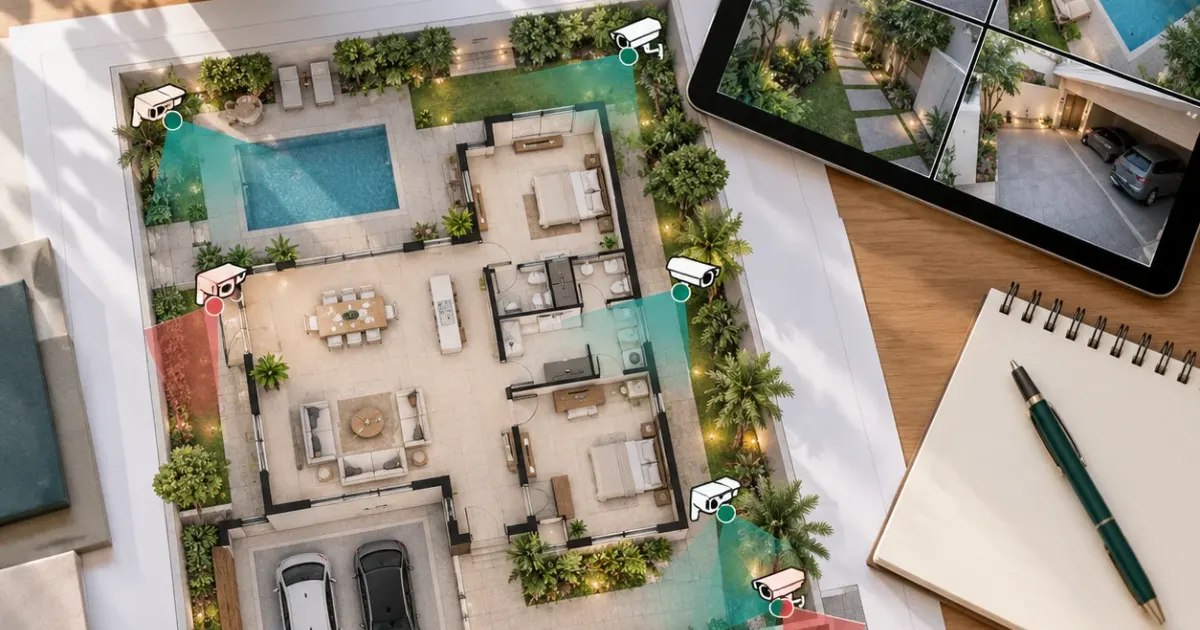
No two properties carry the same exposure. A villa, a tower and a warehouse differ in how people enter, what sits at risk and how the day runs. That is why security solutions in Dubai usually begin with a site survey covering layout, entry points, coverage needs and security priorities, before any equipment is named.
A risk assessment is a written list of weak spots for one specific property. It shows where cameras should look, who needs access and what records you will want later.
Walk the Property Before You Choose Home Security Systems
Go slowly and treat every door and gap as a question. Note the entry points: front doors, side access, the garage and any gate. Look at open ground such as gardens, fences and parking areas, which need wider coverage than a doorway. Mark indoor spots where a camera should stay discreet. Then ask who arrives, how often and who lets them in, vehicles included.
Write it all down. That list becomes the brief for any installer.

Match Camera Types to the Risk You Found
Each risk points toward a different tool. IP cameras suit properties that want sharp detail, with some models reaching 4K and offering human detection or intrusion alerts. Analog HD cameras make sense when an older system needs an upgrade without replacing the whole network. Wireless units suit homes and small shops with minimal cabling, and they allow mobile access.
Design matters too. Dome cameras sit discreetly on indoor ceilings. Bullet cameras are meant to be seen, which suits exteriors, fences and parking areas. PTZ cameras pan, tilt and zoom across large grounds. Turret cameras reduce the infrared glare that domes can produce at night.
Check SIRA Rules, Storage and Upkeep Early
Requirements depend on the property type and how the system will be used. Where SIRA requirements apply, a system installed for official security or compliance purposes must be handled by an approved technician. Look for a SIRA approved CCTV company in Dubai, then confirm your category with SIRA before buying anything.
Expect a sequence: survey, design, installation, inspection and certification, then ongoing maintenance. SIRA lists three business days for security plan certification and two for new system certification once documents are in order, so overall timelines vary.
Retention is its own line item. A range of 60 to 90 days gets cited often, but SIRA sets different periods for different facility types, so confirm yours first. Longer retention needs more recorder capacity, and that affects cost alongside camera count and technology. An annual maintenance contract adds periodic inspections by certified engineers.
Plan Who Comes In as Well as What Gets Filmed
Home security systems are often discussed as cameras alone, yet entry control belongs in the plan. A visitor management system records who arrives, when and for whom. It suits shared buildings and gated communities, where residents can pre-register a guest through a mobile app, get an alert on arrival, and the guest receives a digital pass. Other features include QR code check-in, host alerts through WhatsApp, email or Microsoft Teams, printed badges and Arabic and English interfaces. Check-ins can also link to CCTV footage and access control for faster searching.
Visitor logs hold personal data, so ask how it is stored and protected under UAE rules.
Final Thoughts
A good plan starts with a list, not a shopping cart. Map the entry points, match camera types, confirm SIRA and storage rules, then decide how visitors are recorded. Bennellin outlines a similar survey, design, installation and inspection sequence for CCTV projects. Which entrance on your property would top your list if you walked it today?
FAQ
Start with a walk-around. List every entry point, open ground and blind spot. That tells you which camera types you need. Then find out if SIRA requirements apply to your property.
It depends on the property and how the system is used. Personal-use cameras differ from systems installed for official security or compliance. For the second kind, an approved technician does the work. Confirm your category with SIRA first.
Retention depends on the facility type and the SIRA rules that apply to it. Sixty to ninety days gets quoted often, but confirm yours before sizing storage, since longer retention needs more recorder capacity.
Often, yes, for shared buildings and gated communities, where residents can pre-register guests and get an arrival alert. A single villa with occasional visitors may not need that much tracking.