

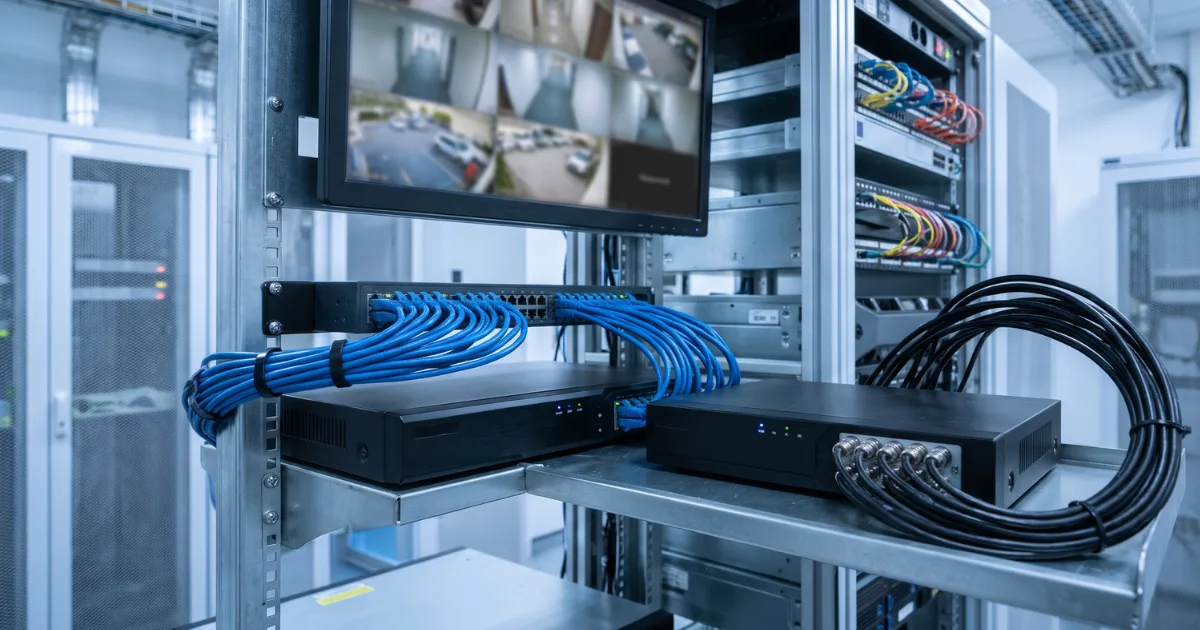
NVR vs DVR CCTV: What Each Recorder Does
Walk the site before you pick a box. Where coaxial cable already runs behind finished walls, a DVR can keep those routes and leave the walls alone. In a new build, network cabling is the more common route, and an NVR sits on that network.
The network matters more than most owners expect. High definition IP cameras push a lot of data, and a weak backbone shows up as dropped or laggy footage. That is a cabling and switch problem, not a camera fault.
Wireless cameras are a separate case. They suit apartments and small shops where running cable is unrealistic. They may not be accepted for premises regulated by SIRA, the Security Industry Regulatory Agency, so check acceptability for your category before buying.
The Difference Between DVR and NVR on a Real Site
Walk the site before you pick a box. Where coaxial cable already runs behind finished walls, a DVR can keep those routes and leave the walls alone. In a new build, network cabling is the more common route, and an NVR sits on that network.
The network matters more than most owners expect. High definition IP cameras push a lot of data, and a weak backbone shows up as dropped or laggy footage. That is a cabling and switch problem, not a camera fault.
Wireless cameras are a separate case. They suit apartments and small shops where running cable is unrealistic. They may not be accepted for premises regulated by SIRA, the Security Industry Regulatory Agency, so check acceptability for your category before buying.
Storage, Retention and Recorder Size
A recorder is also a hard drive with rules attached. Longer retention needs a bigger NVR or DVR, and higher resolution adds to the load. For most premises, SIRA's Preventative Systems Manual sets a minimum of 31 days of recorded footage from every camera. Financial institutions face extra rules, including at least 75 days for ATM cameras.
Work backwards. Start with the retention period for your facility type, count the cameras, settle the resolution, and then size the storage. That order avoids buying a recorder that fills up and overwrites footage sooner than the rules allow. Retention differs by facility, so confirm your own figure with SIRA or a licensed installer before the design is fixed.
Checking Your SIRA Category Before You Buy
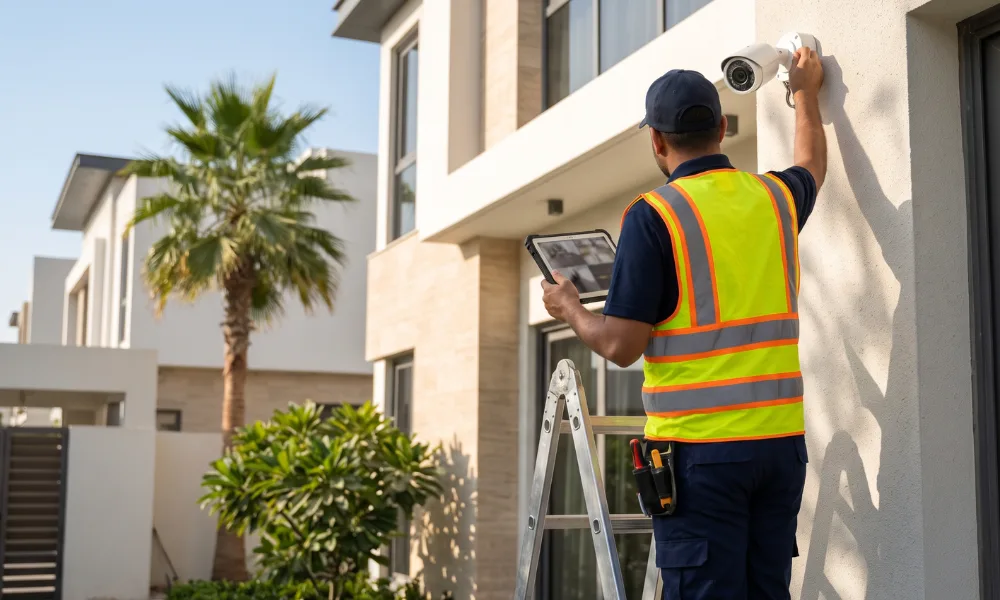
In Dubai, the NVR vs DVR CCTV decision sits inside a regulated system for many commercial premises. Requirements vary with business category, activity and size, and some premises must keep the system under a maintenance contract. The system must be installed by a SIRA approved CCTV company in Dubai, and the camera and recorder models should be confirmed as acceptable for your category.
A licensed company's certificate carries a QR code that opens its details on the official SIRA portal, so you can verify it yourself. A DIY camera for personal use at a villa is a different matter. For regulatory compliance, a self-installed setup may fall short at inspection. Privacy rules apply too, so cameras should never point into a neighbour's private space.
Final Thoughts
Settle the cameras and cabling first, and the recorder follows. An NVR fits network cameras and new builds. A DVR fits a site with coaxial runs worth keeping. Retention days and your SIRA category then sets the storage size and the list of acceptable models. None of this replaces advice from a licensed installer or SIRA itself, because rules differ by premises. What cabling does your site already have, and how many days of footage must it hold? Bennellin, a SIRA-licensed security systems integrator in Dubai, works through questions like these during site surveys.
FAQ
Think of the camera type. A DVR records analogue HD cameras over coaxial cable. An NVR records IP cameras over a network. Pick the recorder that matches the cameras you plan to run, and check what cabling is already in your walls.
Often, yes. An older analogue setup can be upgraded to high definition without rewiring everything, which is why coaxial buildings sometimes stay with a DVR. A site survey tells you what your existing cable can carry.
For most premises, SIRA's manual sets a minimum of 31 days for every camera. ATM cameras at financial institutions need at least 75. Your facility type decides the real number, so confirm it with SIRA or your installer first.
Maybe if you can't run the cable. But they may not be accepted for SIRA-regulated premises. Check your category before you buy, and ask your installer to confirm that both cameras and the recorder are acceptable.