
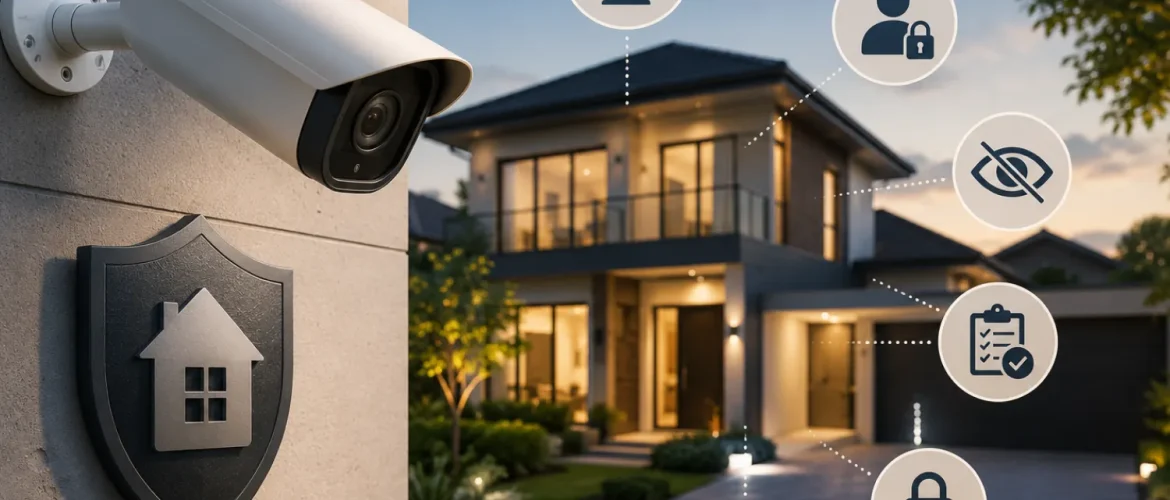
Most people researching the legal requirements for CCTV at home in the UAE are thinking about one thing: keeping their family safe. Fair enough. But there’s a layer to this that catches a lot of homeowners off guard, and it’s worth knowing before you fix anything to a wall.
The UAE has a real legal framework around home surveillance. It’s not a minefield, but it has edges. Miss them and you’re looking at complaints, fines, or worse.
Table Of Contents
What Are the Legal Requirements for CCTV at Home Cover?
Here’s the first thing to clear up. There is no UAE law forcing private homeowners to install CCTV. That obligation falls on commercial properties, not families in villas or apartments. So you’re not in trouble for not having cameras.
What the law does govern is how you use them when you do.
Federal Decree-Law No. 34 of 2021 is the piece of legislation most relevant here. It covers cybercrime and unauthorized surveillance. In plain terms: recording someone in a place where they expect privacy, without their knowledge, is a legal offense. It doesn’t matter that you own the property.
Cameras facing your own front door, your own driveway, your garden, your internal rooms? Completely within your rights. No issues there. The moment a camera captures a neighbor’s balcony, their garden, or a shared corridor in a building, you’re in territory that can generate a formal complaint and legal consequences.
People underestimate this. UAE courts take privacy violations seriously. A camera angle that seems harmless from inside your home can look very different from the perspective of the law.
Where SIRA Fits Into the Picture for Homeowners?
SIRA, which stands for Security Industry Regulatory Agency, is primarily a commercial regulator in Dubai. Retail shops, offices, warehouses, hospitality venues: these are the businesses SIRA rules are built around. A private family home used only as a residence doesn’t fall under mandatory SIRA certification requirements.
That said, there are situations where SIRA standards do touch residential properties.
Run a business from your home address? Commercial rules now apply to that space. Live in a master-planned community with its own security standards written into the management agreement? Those can require any installed system to meet technical minimums. Some villa compounds and newer residential developments in Dubai include these clauses, and they’re enforceable.
Even when SIRA certification isn’t strictly required, choosing a SIRA-approved installer makes practical sense. The installation standards they follow, including resolution requirements, storage configuration, and proper cabling, are the same standards that make footage actually useful in a legal or police context. A system installed correctly from the start avoids a lot of problems later.
Bennellin is SIRA-certified and has been working across Dubai residential and commercial properties for over a decade. Their approach starts with a proper site survey, not a camera box and a drill. Brands like Hikvision, Dahua, and Tiandy are their go-to for a reason: reliable hardware that meets local technical standards without overpaying for specs you don’t need.
The Situations That Actually Cause Legal Problems
Most homeowners who end up in trouble with home CCTV weren’t doing anything deliberately harmful. The problems tend to be careless rather than calculated.
Domestic workers are the area most commonly raised. Filming a housekeeper or nanny in their bedroom or in a bathroom is illegal. It doesn’t matter that you own the home. Those spaces carry a right to personal privacy for anyone living or working there. This is a firm line, not a grey area.
Footage sharing is the second trap. Something gets caught on camera, and within minutes it’s in a family WhatsApp group or posted to a community page. UAE law doesn’t only look at how footage is captured. It looks at what happens to it afterward. Sharing video showing identifiable individuals without their consent can be prosecuted under the same cybercrime laws that cover unauthorized recording.
This applies even when the intention is good. Posting a clip of a suspicious vehicle to warn neighbors is the kind of thing people do without thinking twice. It can still constitute a legal violation if the footage shows people who haven’t consented to being shared publicly.
What a Sensible Home Setup Actually Looks Like
Camera choice shapes both coverage and compliance.
Dome cameras are the most practical option for indoor areas and entry points. They are low profile, vandal-resistant, and they don’t create the kind of visual that makes visitors uncomfortable. Bullet cameras are better suited for outdoor driveways and garden perimeters where you need a longer focal range. Larger villas with open grounds benefit from PTZ cameras, which allow active movement and zoom rather than one locked angle.
Resolution matters more than most people realize. Blurry footage is functionally useless when you actually need it. SIRA’s minimum standards for commercial systems exist because low-resolution images rarely hold up as evidence. The same logic applies at home.
Storage is usually the last thing homeowners think about and one of the most important. For commercial SIRA-regulated systems, thirty days of footage retention is a standard minimum. For a home setup, keeping two to four weeks of stored footage gives you a realistic window to recover recordings after an incident.
Plan camera angles before installation, not after. A technician doing a proper site survey will look at entry points, natural lighting at different times of day, any shared walls or boundaries, and the specific layout of your property. That process is what separates a camera system that actually protects you from one that creates legal exposure.
Final Thoughts
Installing CCTV by following legal requirements for CCTV at Home in the UAE is a practical and completely legitimate choice for protecting your property and family. The legal framework around it is not there to create obstacles. It’s there to make sure your security doesn’t come at the expense of someone else’s privacy.
Get placement right before anything goes up. Use a certified installer who knows the local standards. And treat any footage you capture with the same discretion you’d want applied to yourself.
FAQ
Can I legally install cameras inside my home in the UAE?
Yes, absolutely. Inside your own home, personal security cameras are completely permitted. The restriction kicks in around private spaces for anyone living or working in the property, like a domestic worker’s bedroom or a bathroom. Those spaces are protected regardless of who owns the building.
Do I need SIRA approval for a home CCTV system in Dubai?
For a purely private residence, no, it’s not a legal requirement. SIRA certification applies to commercial properties. But if your home is also a registered business address, or your community management agreement sets security standards, then the rules shift. Either way, hiring a SIRA-certified installer like Bennellin means the job meets the technical standard that makes footage credible and legally useful.
My camera covers my front gate but might catch my neighbor’s garden. Is that a problem?
Potentially, yes. UAE law takes unauthorized capture of private spaces seriously. If a neighbor files a formal complaint about your camera angle, it carries legal weight. The fix is simple: adjust the angle before installation so your coverage stays within your property boundary. A site survey from a professional installer handles this upfront.
Can I share CCTV footage on WhatsApp or a community group?
This is where a lot of well-meaning residents land in trouble. Sharing footage that shows identifiable people without their consent can be prosecuted under UAE cybercrime law. Even sharing a clip to warn neighbors about something suspicious falls into this category if people’s faces or personal details are visible in the video.
How long should I keep footage from a home CCTV system?
There’s no fixed legal minimum for private residential systems. Commercially, SIRA-regulated setups require at least thirty days. For a home system, two to four weeks of storage is a practical baseline. It gives you enough of a lookback window to retrieve footage after something happens rather than realizing the recording has already been overwritten.

